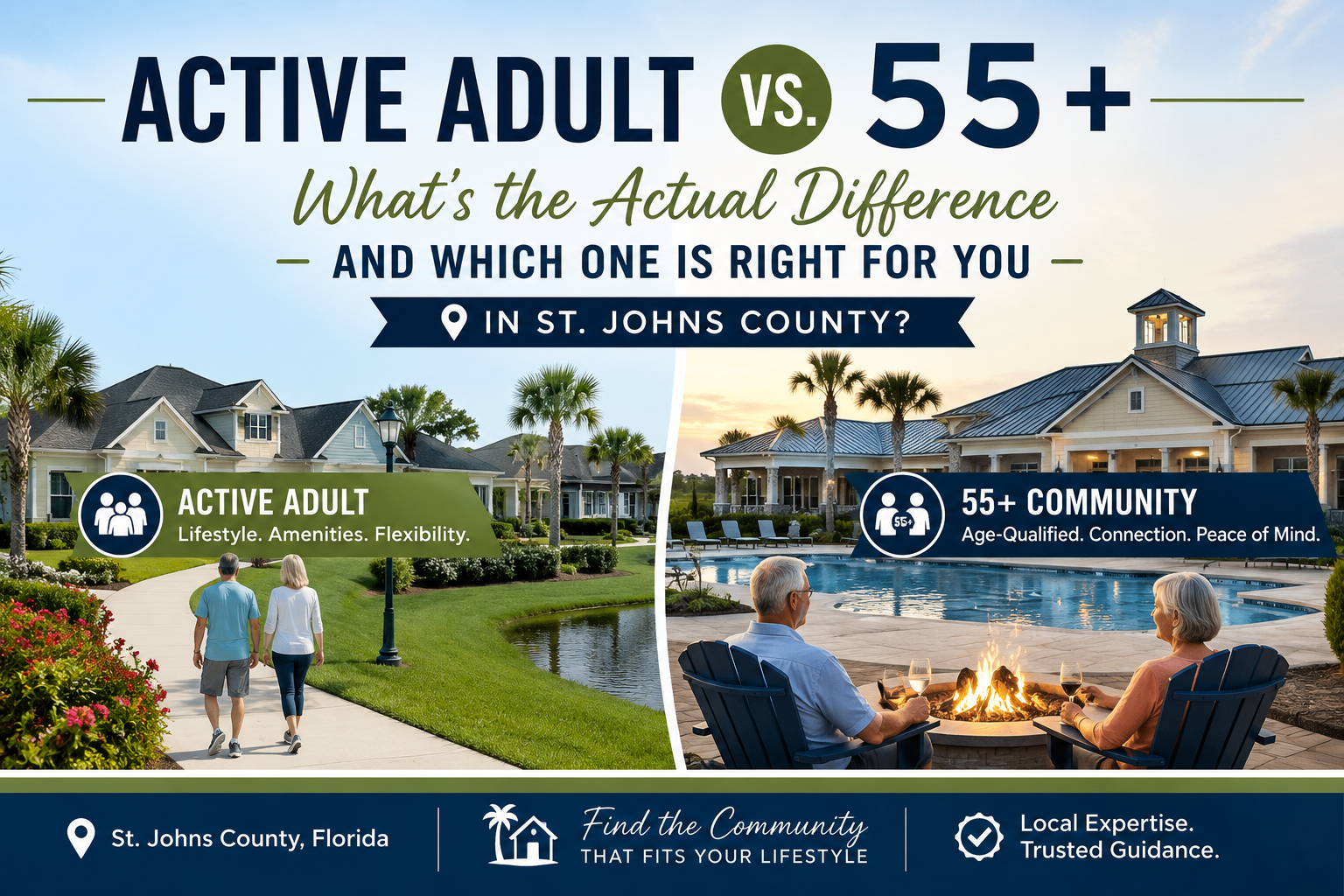
If you're shopping for a home in one of St. Johns County's popular retirement communities, you've probably seen the terms "55+" and "active adult."
Many people assume they mean the same thing—but they don't always.
Understanding the difference can help you choose the community that best fits your lifestyle, future plans, and even who can live in your home.
Let's break it down in plain English.
What Is a 55+ Community?
A 55+ community is legally age-restricted under the Housing for Older Persons Act (HOPA), part of the federal Fair Housing Act.
To qualify, the community must meet several requirements:
- At least 80% of occupied homes must have one resident who is 55 or older
- The HOA must verify residents' ages
- The community must follow written policies to maintain its age-restricted status
This creates a neighborhood designed specifically for active adults and retirees.
What Is an Active Adult Community?
The phrase "active adult" is often used as a marketing term.
Sometimes it refers to a true 55+ community—but not always.
An active adult community may be:
- A legally age-restricted 55+ community
- A neighborhood designed for older adults but open to buyers of any age
- A 55+ section within a larger, multigenerational community
The key takeaway: Never assume "active adult" automatically means age-restricted.
Why This Matters
Choosing the right type of community affects more than just your lifestyle.
It can also impact:
- Who can permanently live in your home
- Whether grandchildren can stay for extended periods
- Future resale options
- The overall feel of the neighborhood
For some buyers, a guaranteed 55+ environment is exactly what they're looking for. Others prefer the flexibility of a community without legal age restrictions.
Which One Is Right for You?
Choose a 55+ Community If:
✔ You want neighbors in a similar stage of life.
✔ You enjoy organized clubs, events, and active-adult amenities.
✔ You prefer a quieter, age-focused environment.
✔ You're comfortable with resale being limited to buyers who meet community age requirements.
Choose an Active Adult (Non-Restricted) Community If:
✔ You want similar amenities without age restrictions.
✔ You may have younger family members living with you in the future.
✔ Resale flexibility is important.
✔ You're comfortable living in a neighborhood with residents of all ages.
Questions Every Buyer Should Ask
Before making an offer, ask the HOA or builder:
- Is this community officially age-restricted under HOPA?
- Can family members under 55 live here permanently?
- What are the rules for grandchildren or extended guests?
- Are these rules written in the HOA documents?
- Are there any occupancy exceptions?
Getting these answers in writing can help avoid surprises after closing.
The Bottom Line
While "55+" and "active adult" are often used interchangeably, they aren't always the same.
A 55+ community offers a legally protected, age-restricted lifestyle with neighbors in a similar stage of life.
An active adult community may provide many of the same amenities but could also be open to residents of all ages.
Neither option is better—it simply depends on your lifestyle, family plans, and long-term goals.
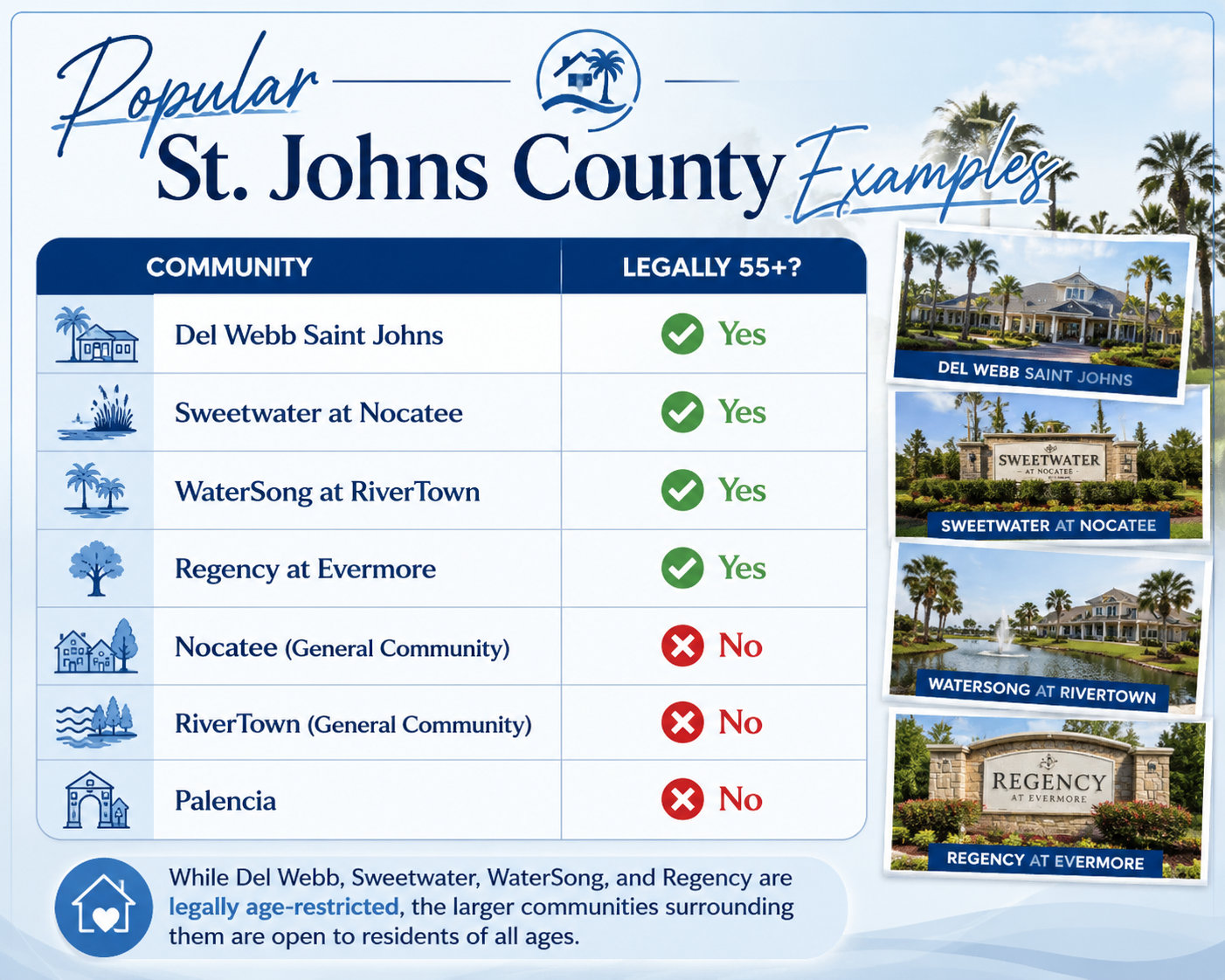
If you're considering communities like Del Webb Saint Johns, Sweetwater at Nocatee, WaterSong at RiverTown, or Regency at Evermore, understanding this distinction can help you choose the community that's the best fit for you.
Not Sure Which Type Fits Your Situation?
I walk buyers through this distinction constantly — and I know exactly which St. Johns County communities are legally restricted, which are lifestyle-branded but open, and which fit your specific family situation best.
Call or text Gail DeMarco: 904-640-8000
St. Johns County 55+ & Active Adult Community Specialist
Serving Del Webb Saint Johns, Sweetwater at Nocatee, WaterSong at RiverTown, Regency at Evermore, Nocatee, RiverTown, and all of St. Johns County, FL
This article is for general informational purposes and does not constitute legal advice. HOPA compliance and community-specific policies are subject to change. Always verify directly with the HOA and review governing documents (CC&Rs) before purchasing.