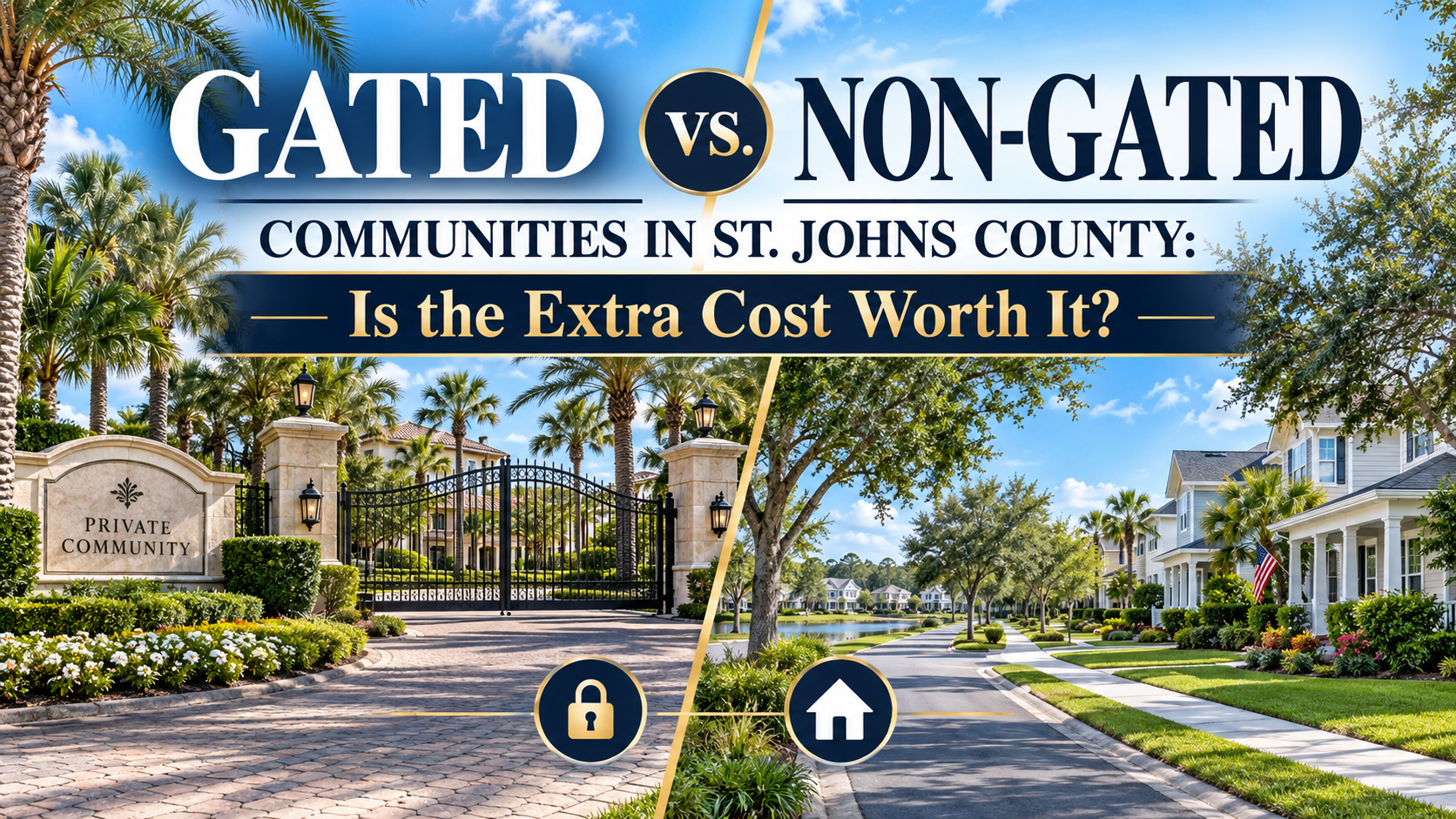
"Should we pay more for a gate?" is a question I get on nearly every tour — and the honest answer is: it depends entirely on what you're actually paying for.
Not all gates are the same, and not all HOA premiums buy the same thing. Here's the real cost breakdown so you can decide whether the extra money buys you something you'll actually value.
What "Gated" Actually Means — It's Not One Thing
Before comparing costs, understand that "gated" covers a real range:
| Gate Type | What It Means | Typical Cost Impact |
|---|---|---|
| Staffed/manned gate | 24/7 attendant checking every entry | Highest HOA premium |
| Coded/card access gate | Automated entry, no attendant | Moderate premium |
| Simple fenced perimeter | Physical boundary, minimal access control | Lowest premium |
The gate itself is only part of what you're funding. Gated communities pay for the gate infrastructure, the staffing or technology behind it, and often private streets — all of which run through the HOA rather than being publicly maintained.
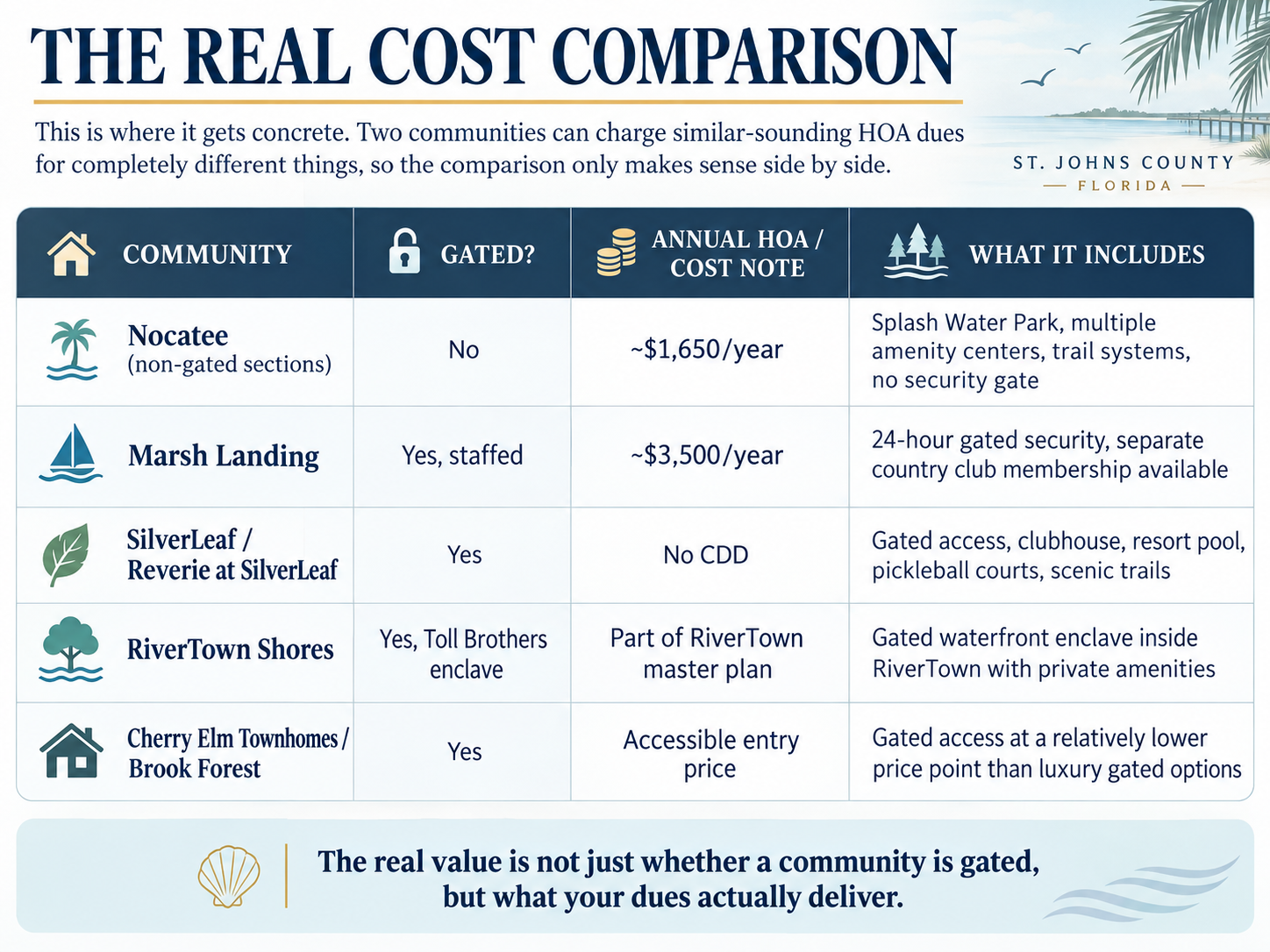
The typical range across Northeast Florida: most master-planned community HOAs run $800–$4,000 per year, while gated luxury communities with golf access can climb to $5,000–$15,000+ annually.
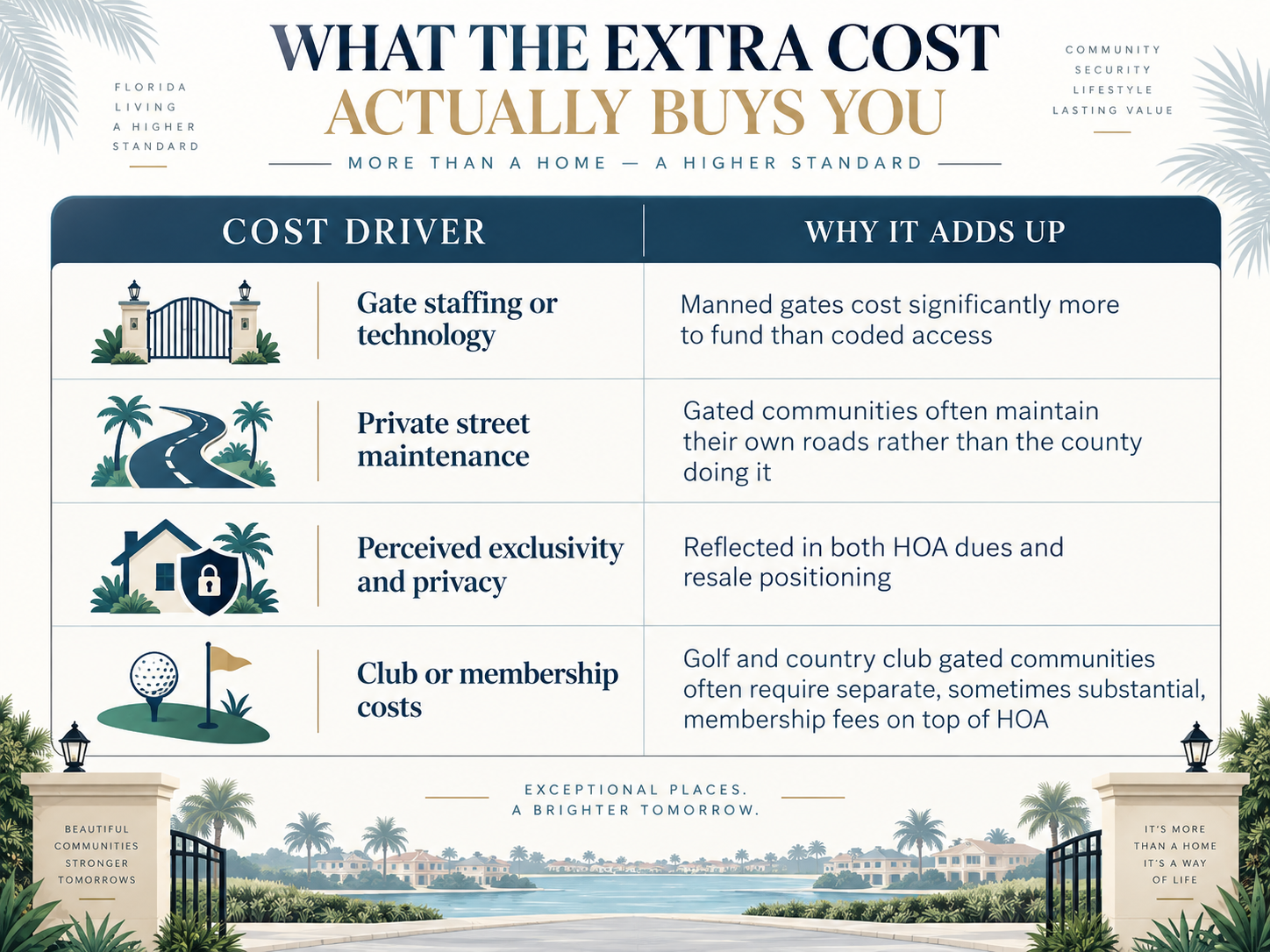
This last point matters: at communities like Marsh Landing, the HOA dues fund the gate and security — golf club membership is a completely separate cost, and can run into five figures for initiation alone. Always ask specifically whether a gated community's dues include or exclude club access.
The Good News: Gated Doesn't Always Mean Higher CDD
Here's a genuinely useful data point for buyers trying to minimize total carrying cost: some of St. Johns County's gated communities carry no CDD fee at all — SilverLeaf and its gated Reverie section being the clearest example. That means you can get gated privacy and resort amenities without stacking a CDD assessment on top of your HOA, which isn't true of every gated new-construction community in the county.
This is worth verifying community by community — many newer gated master plans do carry CDD assessments on the tax bill in addition to HOA dues, so the "gated premium" can come from two different directions depending on where you buy.
Who Actually Gets Value From a Gate
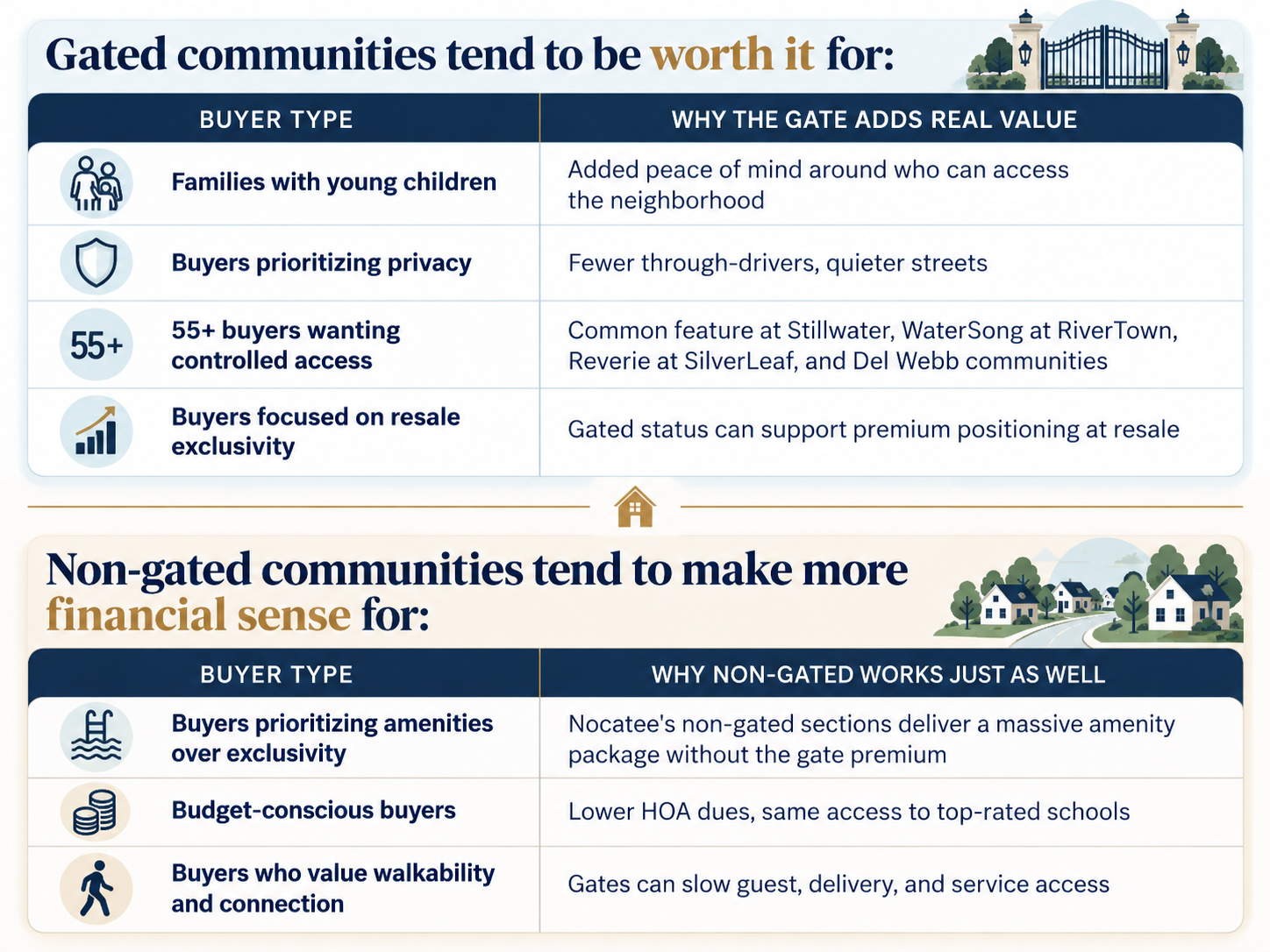
The Honest Question to Ask Before You Pay the Premium
Every buyer touring a gated community should ask the same question the local market data itself points to: which of these amenities will you actually use? A young family will genuinely use a Splash Water Park at a non-gated Nocatee section. A retiree may extract more real value from golf or pickleball access at a gated 55+ community than from paying for staffed security they may rarely think about day to day.
Before writing an offer in any gated community, ask for the most recent annual HOA budget and the current CDD assessment — don't rely on a rounded verbal estimate from a sales agent.
The Bottom Line
Gated communities in St. Johns County genuinely deliver real value for the right buyer — enhanced privacy, controlled access, and often a stronger resale positioning. But the premium varies enormously, from a modest bump at communities like SilverLeaf's gated sections (with no CDD to offset it) to a substantial jump at staffed, club-adjacent communities like Marsh Landing.
The extra cost is worth it when the gate buys you something you'll genuinely use or value — security peace of mind, privacy, or amenities that match your lifestyle. It's not worth it if you're paying a premium for a gate you'll drive through without a second thought, when a non-gated community with a stronger amenity package would serve you just as well for less.
Want a Side-by-Side Comparison for Your Budget?
I can pull the actual HOA budgets and CDD assessments for any gated or non-gated community you're considering, so you know exactly what you're paying for before you make an offer.
Call or text Gail DeMarco: 904-640-8000
St. Johns County Relocation Specialist
Serving Nocatee, SilverLeaf, RiverTown, Marsh Landing, Del Webb communities, and all of St. Johns County, FL
HOA and CDD figures reflect 2026 estimates from local brokerage and market research sources current as of publication. Fees vary significantly by community, phase, and lot — always verify current figures directly with the HOA before making an offer.