
Before you choose a community, a floor plan, or even a price range, there's a bigger decision that shapes everything else: are you buying a seasonal escape, or are you moving your whole life here?
Snowbird and full-time ownership look similar on paper — both mean owning a home in St. Johns County. But the tax outcomes, insurance requirements, and total cost of ownership are genuinely different depending on which path you choose. Here's the honest breakdown.
The Core Definitions
A snowbird is someone who lives in Florida seasonally — typically fall through spring — while keeping their primary residence and legal identity in another state. Florida becomes a lifestyle add-on, not the center of their financial and legal life.
A full-time resident moves their entire life to Florida — legally, financially, and emotionally. Florida isn't just where they spend time; it's home, with all the tax and legal benefits that come with properly establishing that residency.
The Tax Reality Most Snowbirds Don't Realize
This is the single biggest misconception in the snowbird-vs-full-timer decision: simply owning a Florida home, even spending half the year there, does not make you a Florida resident for tax purposes.
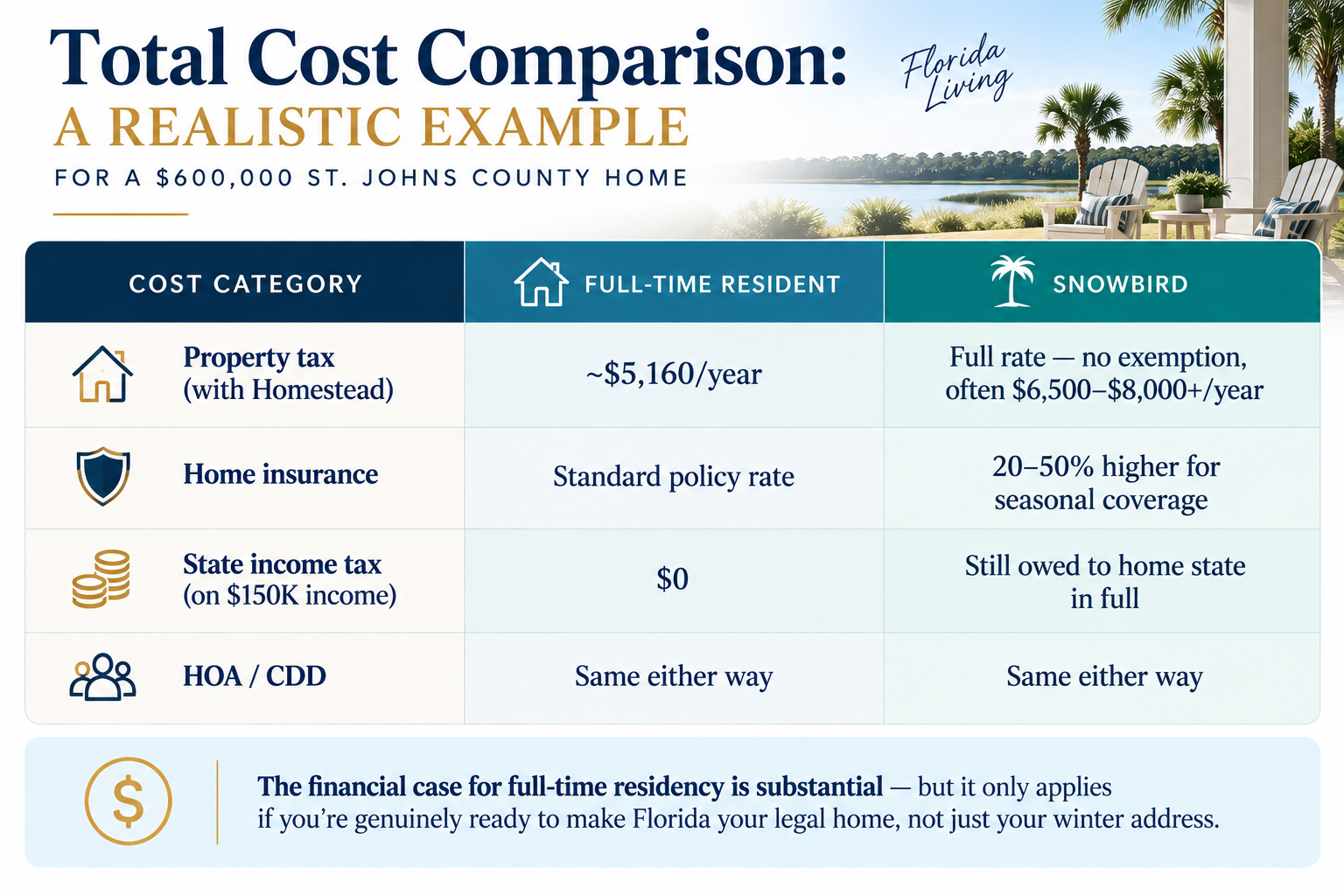
To legally establish Florida domicile and access the state's tax advantages — no state income tax, no estate tax, the Homestead Exemption — you generally need to spend 183+ days per year in Florida, obtain a Florida driver's license, register to vote here, and file a formal Declaration of Domicile. Snowbirds who split time roughly evenly, or who spend more time in their home state, don't clear that bar — meaning they continue paying their home state's income tax in full, even while owning valuable Florida real estate.
The Homestead Exemption specifically requires the property to be your permanent primary residence as of January 1 of the tax year. A seasonal home doesn't qualify — meaning snowbirds pay full, non-homesteaded property taxes, with no Save Our Homes 3% assessment cap protection either.
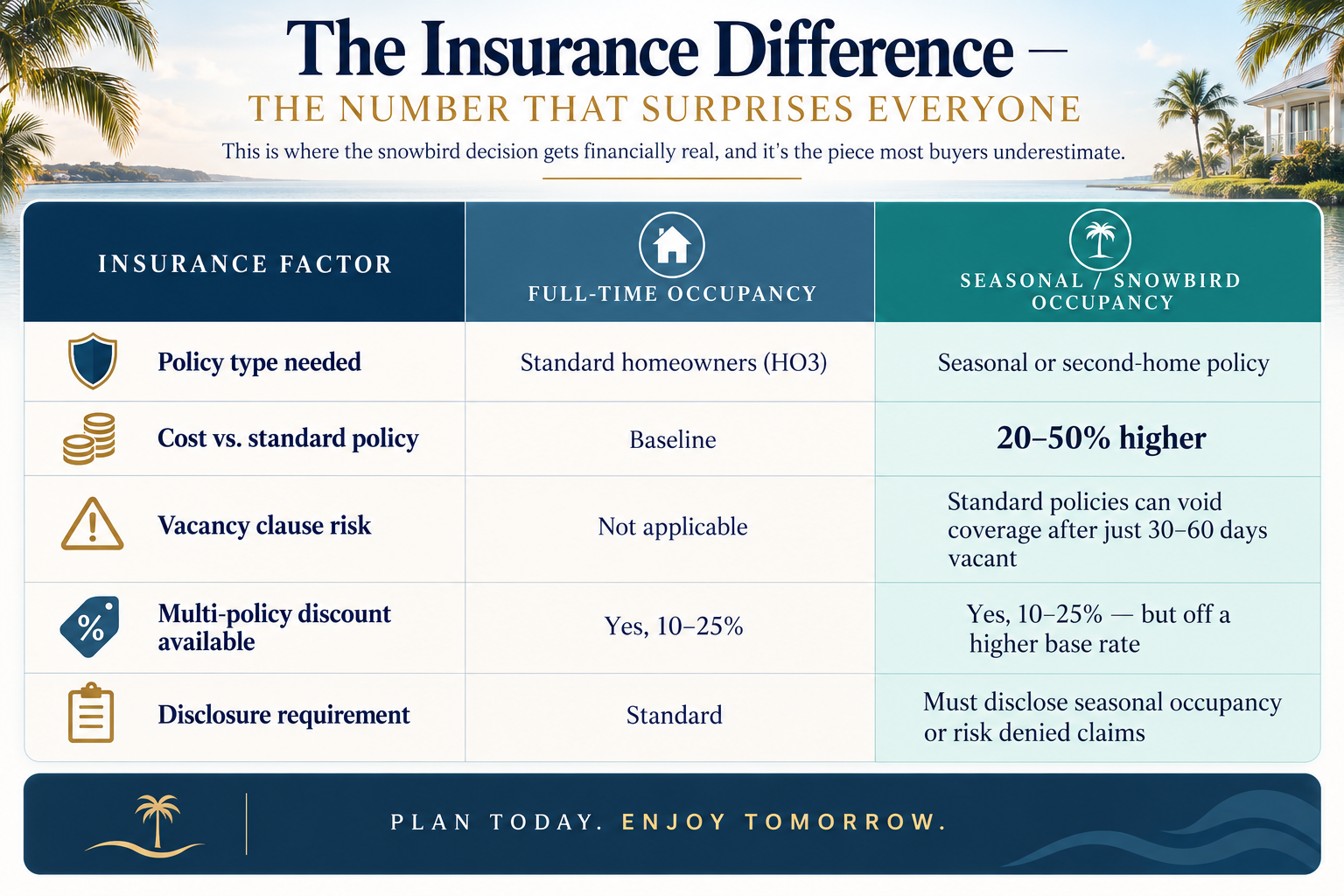
The vacancy clause is the detail that catches snowbirds off guard most often: many standard home insurance policies stop covering damage after the home sits empty for as little as 30 to 60 days. If you're away for four to six months, you need explicit written confirmation from your carrier that seasonal absence is covered — not an assumption.
The timing problem is real, too. Atlantic hurricane season runs June 1 through November 30, peaking mid-August through October — which overlaps directly with the months many snowbirds are away from their Florida home. An unattended house during peak storm season faces real risks: wind damage to screen enclosures and roofs, fallen limbs, and multi-day power outages that can quietly ruin a freezer and shut down air conditioning in Florida humidity, sometimes for days before anyone notices.
What every snowbird should do before heading north: disclose seasonal occupancy to your insurer, install leak detection and security monitoring, arrange regular property inspections while you're away, prepare the home for hurricane season before you leave, document your home's contents, and confirm flood and wind coverage are both active and adequate.
HOA and CDD Fees: The Cost That Doesn't Care Where You Live
This is a genuinely neutral factor — one worth knowing regardless of which path you choose.
HOA dues and CDD assessments are tied to the property, not your occupancy pattern. Whether you live in your St. Johns County home 365 days a year or 150, the monthly HOA bill and annual CDD assessment arrive exactly the same. There's no seasonal discount for using the pool less.
Is St. Johns County Even a "Snowbird" Destination?
Worth addressing honestly: St. Johns County isn't traditionally where most Florida snowbirds land. The classic snowbird belt runs through Tampa Bay, Sarasota, Bradenton, Clearwater, and Southwest Florida — areas with a longer-established seasonal-resident culture and infrastructure built specifically around part-time ownership.
That said, a genuine and growing number of buyers still choose St. Johns County as a seasonal base — usually because they have grandchildren or family they want proximity to via direct flights from Jacksonville International, because the area's slightly cooler winter climate compared to deep South Florida still feels like a dramatic upgrade from the Northeast, or because they're testing the waters before committing to a full-time move here later.
Which Approach Fits You?
Choose snowbird ownership if: you're not ready to fully leave your home state, you want to test St. Johns County before committing long-term, or your family and career ties still anchor you elsewhere for part of the year.
Choose full-time residency if: you want the full tax benefit — no state income tax, Homestead Exemption, Save Our Homes cap — you're ready to establish genuine Florida domicile, and you want your insurance and carrying costs to reflect year-round occupancy rather than a seasonal premium.
The Bottom Line
Both paths are legitimate ways to own in St. Johns County — but they are not financially equivalent, and treating them as interchangeable is where buyers get surprised. Snowbirds pay a real premium in both insurance and property taxes for the flexibility of splitting their time. Full-timers unlock Florida's full tax advantage, but only once they've genuinely and legally established residency here.
Know which path you're actually on before you buy — it changes your insurance shopping, your tax filing, and your total cost of ownership from day one.
Not Sure Which Path Fits Your Situation?
I can walk you through the real cost difference for your specific circumstances and connect you with a Florida CPA and insurance broker who specialize in exactly this decision.
Call or text Gail DeMarco: 904-640-8000
St. Johns County Relocation Specialist
Serving Nocatee, SilverLeaf, RiverTown, Del Webb Saint Johns, and all of St. Johns County, FL
Insurance and tax figures reflect 2026 estimates from licensed Florida insurance sources and public tax guidance. Individual circumstances vary significantly. This article is for informational purposes only and does not constitute tax, legal, or insurance advice — consult a qualified CPA and licensed insurance agent.