
Moving from New Jersey or New York? A Florida home inspection is very different—and missing a few key inspections could cost you thousands after closing.
If you're relocating to St. Johns County, Florida, don't assume the inspection process is the same as it is up north.
While every inspection checks the basics—roof, electrical, plumbing, HVAC, and structure—Florida homes face unique challenges from hurricanes, humidity, termites, and insurance requirements that many Northern buyers have never encountered.
Knowing what to inspect before you buy can help you:
- Avoid expensive surprises after closing
- Lower your homeowners insurance premium
- Strengthen your negotiating position
- Make a more confident buying decision
Why Florida Home Inspections Are Different
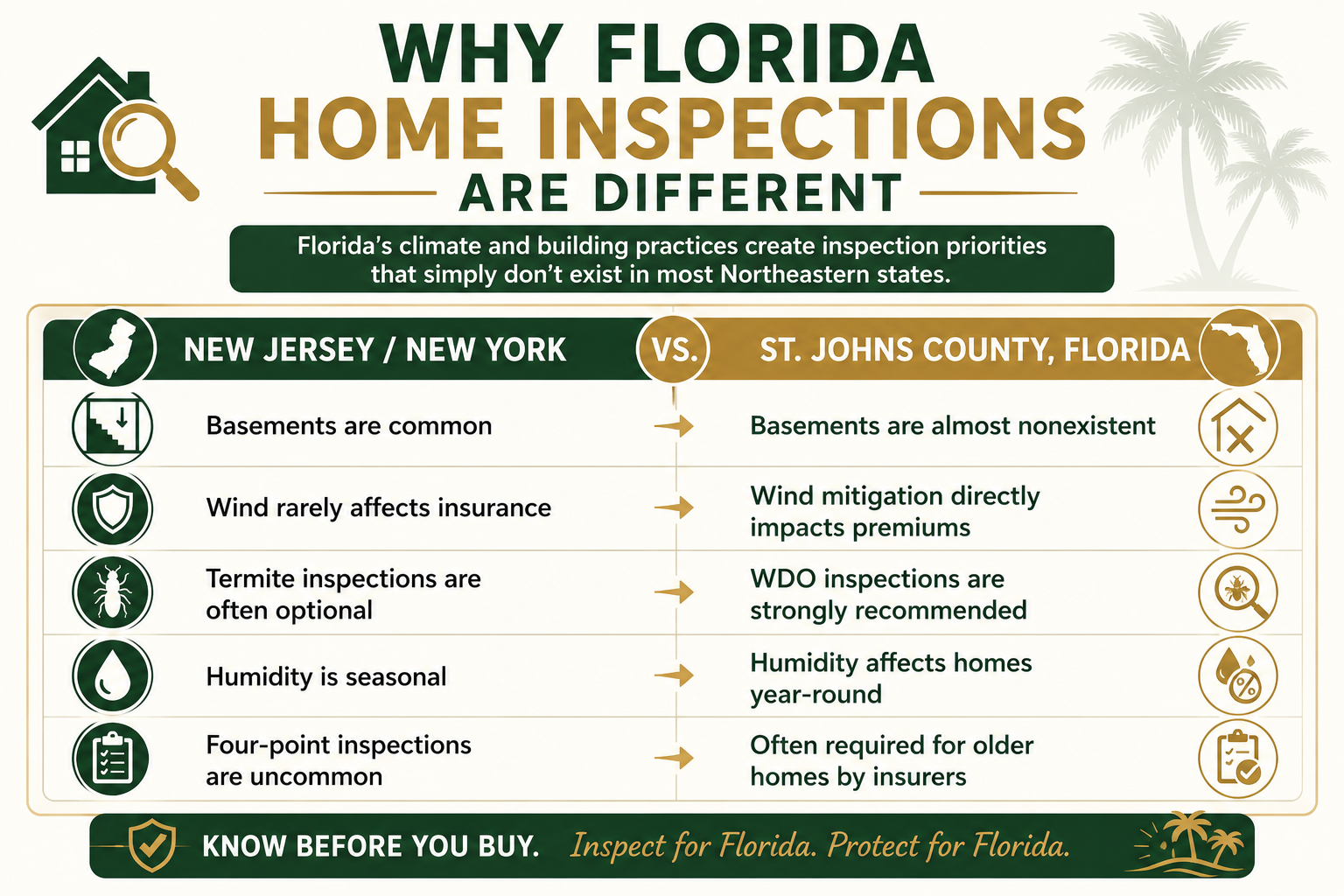
Understanding these differences before scheduling inspections helps prevent unexpected costs later.
1. Roof Condition Is More Than a Maintenance Issue
In Florida, your roof affects much more than curb appeal.
Insurance companies closely evaluate:
- Roof age
- Roofing material
- Previous storm damage
- Roof-to-deck attachment
- Roof shape (hip roofs often qualify for discounts)
Many Florida insurers become more restrictive once a roof reaches 15–20 years old.
Ask your inspector:
- How old is the roof?
- Is there evidence of storm damage?
- Are repairs visible?
- Will the roof affect insurance eligibility?
A newer roof often means lower insurance costs and stronger resale value.
2. Don't Skip the Wind Mitigation Inspection
This is one inspection many Northern buyers have never heard of—but it may provide one of the biggest returns.
A wind mitigation inspection evaluates:
- Roof shape
- Hurricane straps
- Roof deck attachment
- Impact-resistant windows
- Storm shutters
Typical cost:
$75–$150
Potential insurance savings:
15–40% annually
For many homeowners, that's hundreds—or even thousands—of dollars saved every year.
3. Four-Point Inspections Matter for Insurance
If you're buying an older home, many Florida insurance companies require a Four-Point Inspection before issuing a policy.
It evaluates:
- Roof
- Electrical
- Plumbing
- HVAC
Common issues that can increase insurance costs include:
- Federal Pacific electrical panels
- Polybutylene plumbing
- Older roofs
- Aging HVAC systems using discontinued refrigerants
These issues may become valuable negotiation points before closing.
4. Always Order a Separate Termite (WDO) Inspection
Florida's warm climate makes termites far more common than in many Northern states.
A licensed pest professional checks for:
- Active termites
- Wood-boring insects
- Wood decay fungi
Typical cost:
$75–150
Remember:
A general home inspector does not perform an official WDO inspection.
5. HVAC Systems Work Much Harder in Florida
Unlike Northern states where heating often gets more attention, Florida air conditioners operate nearly year-round.
Inspectors should evaluate:
- Unit age
- Refrigerant type
- Coil condition
- Air handler
- Ductwork
- Efficiency rating
Replacing an HVAC system can cost several thousand dollars, making older systems an important negotiation item.
6. Check the Stucco Carefully
Many St. Johns County homes feature stucco exteriors.
Watch for:
- Large cracks
- Soft spots
- Moisture intrusion
- Efflorescence
- Failed caulking around windows and doors
Moisture problems can spread quickly in Florida's humid climate, making early detection important.
7. Pools Need Their Own Inspection
If the home includes a pool or spa, schedule a dedicated inspection.
A pool inspection evaluates:
- Surface condition
- Pump and filter
- Heater
- Screen enclosure
- Deck
- Possible leaks
Inspection cost:
$150–300
Considering that pool repairs can reach thousands of dollars, this inspection is well worth the investment.
8. Evaluate Drainage and Lot Grading
Florida's flat terrain makes drainage especially important.
Inspectors should look for:
- Proper grading
- Standing water
- Downspout placement
- Drainage easements
- Retention ponds nearby
Poor drainage today can become water intrusion tomorrow.
9. Know Whether the Home Uses Sewer or Septic
Many homes in St. Johns County—especially those on larger lots—use septic systems.
A septic inspection should include:
- Tank condition
- Drain field
- System age
- Maintenance records
Spending a few hundred dollars on an inspection can help avoid a major repair bill later.
Recommended Inspection Checklist
Before closing on a Florida home, consider scheduling:
✔ General Home Inspection
✔ Wind Mitigation Inspection
✔ Four-Point Inspection (older homes)
✔ WDO (Termite) Inspection
✔ Pool Inspection (if applicable)
✔ Septic Inspection (if applicable)
✔ Sewer Scope (older homes)
✔ Mold Inspection (if moisture concerns exist)
Together, these inspections represent a small percentage of your purchase price but can help protect one of your largest investments.
Use Your Inspection Results to Negotiate
Inspection reports aren't just informational—they're powerful negotiating tools.
Common buyer requests include:
- Roof replacement credits
- HVAC replacement credits
- Electrical repairs
- Plumbing updates
- Termite treatment
- Pool equipment repairs
- Drainage improvements
In today's balanced St. Johns County market, many sellers are open to negotiating these items before closing.
The Bottom Line
A Northern buyer who runs a standard home inspection without the Florida-specific additions is leaving real money on the table — and real risk on the table.
The wind mitigation inspection alone can save $1,000+ per year on insurance. The four-point can reveal an uninsurable electrical panel before it becomes your problem. The WDO can uncover a termite infestation before it consumes your equity.
Order the full suite. Review everything with your agent. Negotiate from the results. This is not excessive caution — it is exactly what experienced Florida buyers do on every transaction.
Call or text Gail DeMarco: 904-640-8000
St. Johns County Relocation Specialist
Serving Nocatee, Ponte Vedra, Del Webb Saint Johns, RiverTown, Palencia, Shearwater, St. Augustine, and all of St. Johns County, FL
Inspection costs are estimates based on 2025–2026 St. Johns County market data. Always hire licensed Florida inspectors for each inspection type. This article is for informational purposes only.